Blocks, granules or syrup: choosing the right gula melaka
Gula melaka blocks, granules and syrup compared by use: cooking, baking and drinks, plus how to order each one.
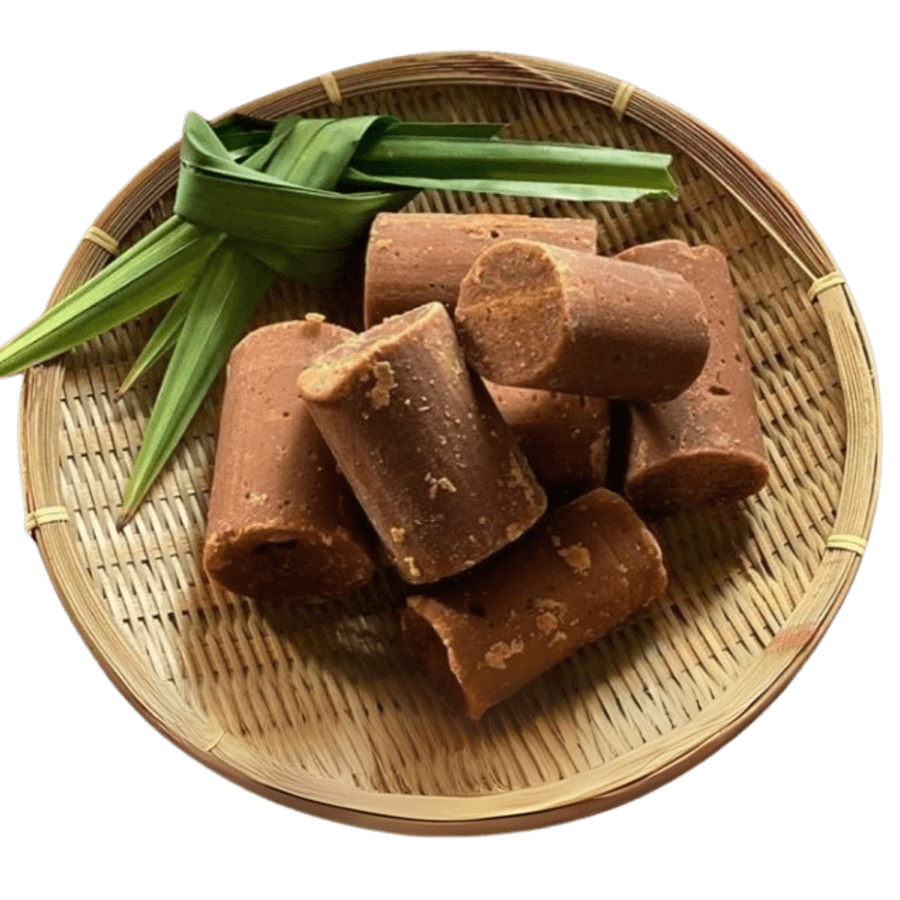
Our gula melaka comes in three forms: blocks, granules and syrup. All three are made from coconut palm sap that is cooked and concentrated, with no granulated sugar and no preservatives added, as the maker states it. The difference is in how you use them. Picking the right one saves time in the kitchen and makes each recipe easier to get right. This article compares the three forms by use, how to handle each one and how to order them.
Meet the three forms of gula melaka
Gula Melaka Blocks
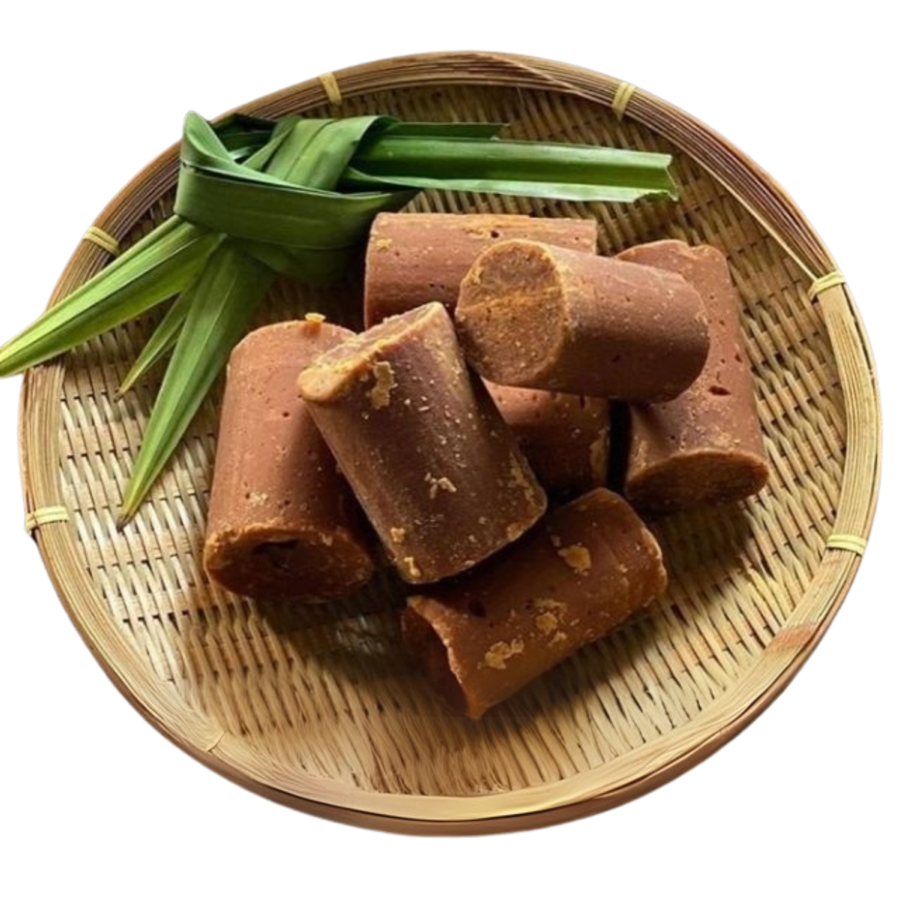
The most traditional form. These cylinder blocks are cut, grated or melted before use. The caramel flavour is deep, and they suit kitchens that like to cook their own syrups and fillings.
Gula Melaka Granules
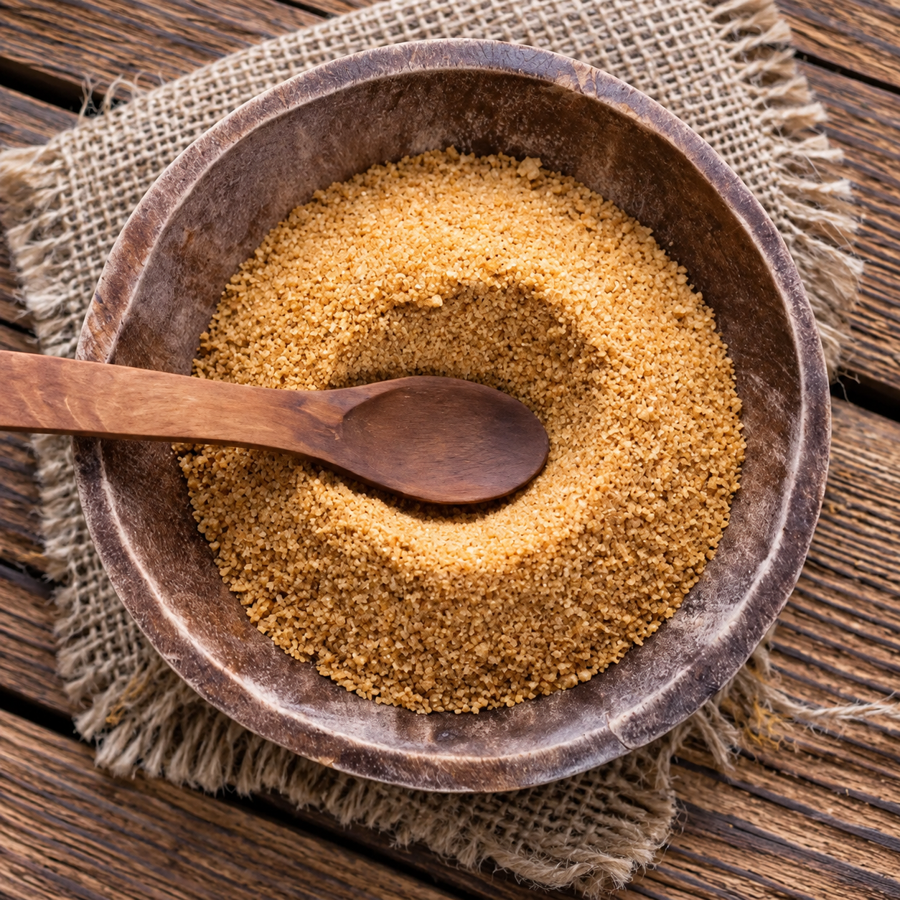
Gula melaka in granule form, ready to measure by the spoon or on the scale. No chopping or grating. Ideal for batters that need precise measures and sugar that mixes in evenly.
Gula Melaka Syrup
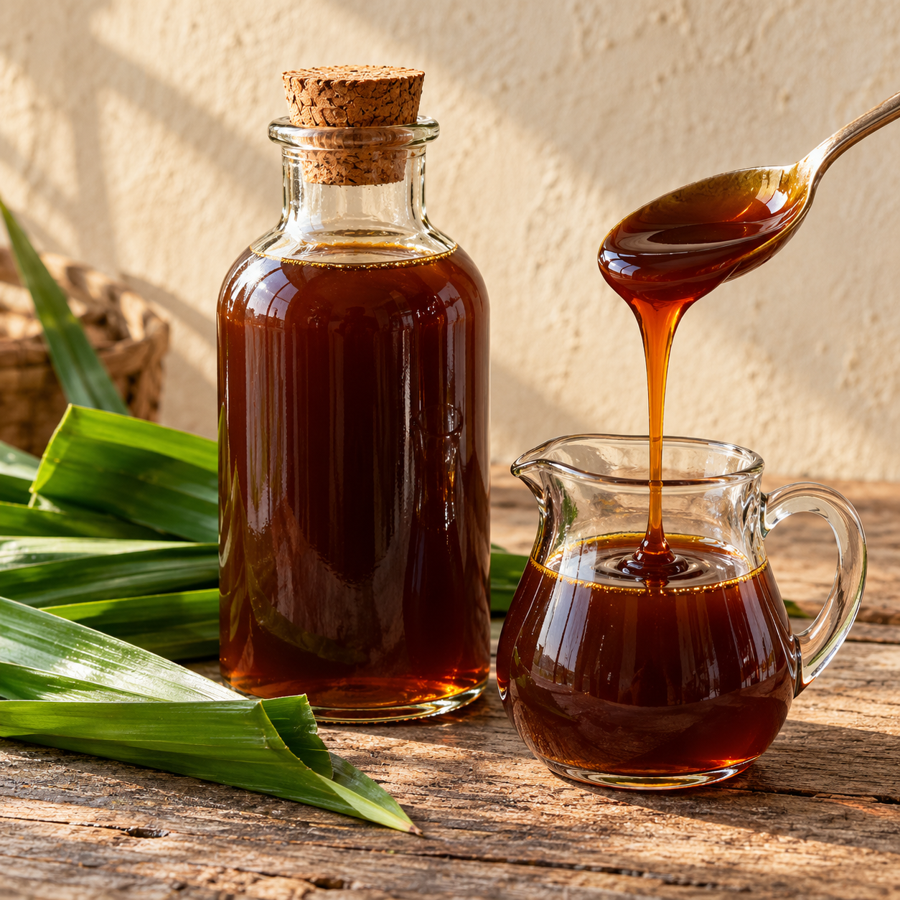
Gula melaka already melted into syrup, ready to pour. The quickest option for drinks and drizzles, and it saves time at the stove.
Which form for which job
For cooking
Blocks are the first choice for traditional dishes such as pengat pisang, the coconut filling for kuih lopes and keria, and sago syrup. They melt easily in a pot with water or coconut milk. The simple ratio our maker gives is 1 kg gula melaka to 200 ml water, cooked until dissolved and thick. The full steps are in our guide on melting gula melaka.
For baking
Granules are the easiest for pandan cake, biscuits and bread because they can be weighed and mixed straight into the dry ingredients. Finely grated blocks work too but take extra time. Syrup is best for pouring over cakes or pancakes.
For drinks
Syrup is the most practical choice for lattes, iced coffee, tea and cendol because it blends in fast, even in cold drinks. Cafés that want to control the strength themselves can cook syrup from blocks.
For food sellers and caterers
Commercial kitchens often use more than one form. A kuih seller might cook fillings and sauces from blocks, use granules for batters that need exact measures, and keep a bottle of syrup for drinks or last-minute drizzles. Caterers cooking hundreds of portions often favour blocks because they melt easily in a large pot. The simplest approach is to look at your menu and ask: will this sugar be cooked, baked or poured?
Quick summary
- Traditional cooking: blocks
- Cakes, biscuits, bread: granules
- Drinks and drizzles: syrup
How to handle each form
Blocks
Use a sharp knife and a dry chopping board. Cut or grate only what you need and keep the rest in an airtight container.
Granules
Granules pick up moisture most easily. Always use a dry spoon and close the container as soon as you are done.
Syrup
Keep it in a clean bottle with a tight cap and wipe the neck after pouring. There is more in our guide on storing gula melaka.
One thing all three share
Every order arrives vacuum packed. If you buy in bulk, open one pack at a time.
How to order each form
Block prices
Gula Melaka Blocks are RM18/kg for 1–99 kg and RM15/kg for 100 kg and above. The second tier suits sellers, bakeries and caterers who use gula melaka every day. Block pack sizes are confirmed on WhatsApp.
Granules and syrup
Prices and pack sizes for granules and syrup are given on WhatsApp. Tell us what you use it for and roughly how much, and we will suggest a suitable pack. All three products are in our price list.
Delivery and Halal
All products are certified Halal by JAKIM and delivered across Malaysia. The delivery charge is confirmed by address, whether you are in Shah Alam, Kuantan or Alor Setar.
Mixing forms in one order
Plenty of customers order more than one form, for example blocks for cooking and syrup for drinks. Just list them all in one message.
Still torn between blocks, granules and syrup? Tell us what you cook and we will help you choose. Get in touch