Genuine or mixed gula melaka: how to tell in the kitchen
The kitchen signs that separate genuine gula melaka from mixed sugar, and the questions worth asking a seller.
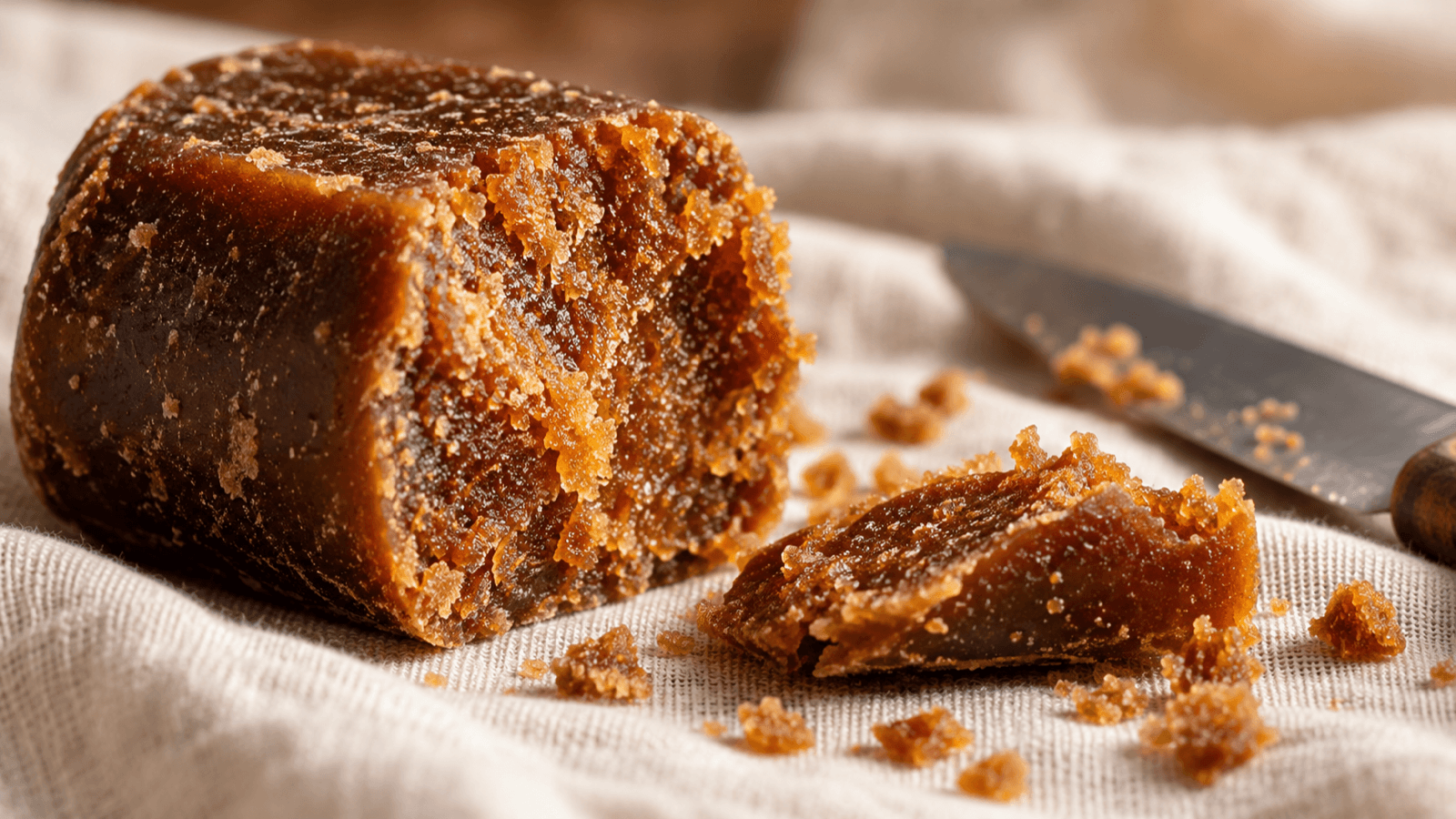
One question comes up again and again: how can you tell whether the gula melaka you bought is genuine or has been mixed with granulated sugar? You do not need a lab. Your hands, your nose and a small saucepan can tell you a great deal. This article shares the signs that gula melaka makers themselves look for, plus the questions worth asking a seller before you buy. The aim is not to point fingers, simply to help you know what goes into your pot.
What genuine gula melaka means
Genuine gula melaka is made from coconut palm sap that is cooked slowly until thick, poured into moulds and left to set. Warisan Gula Melaka is made this way, with no granulated sugar and no preservatives added, as the maker states it.
What mixed gula melaka means
Mixed gula melaka has granulated sugar or other ingredients added during cooking. It can look much the same on the shelf. The difference usually shows only when you taste it, handle it and cook with it.
Signs you can spot in the kitchen
These are the clues makers commonly describe. No single sign settles it on its own, so look at them together.
Look and texture
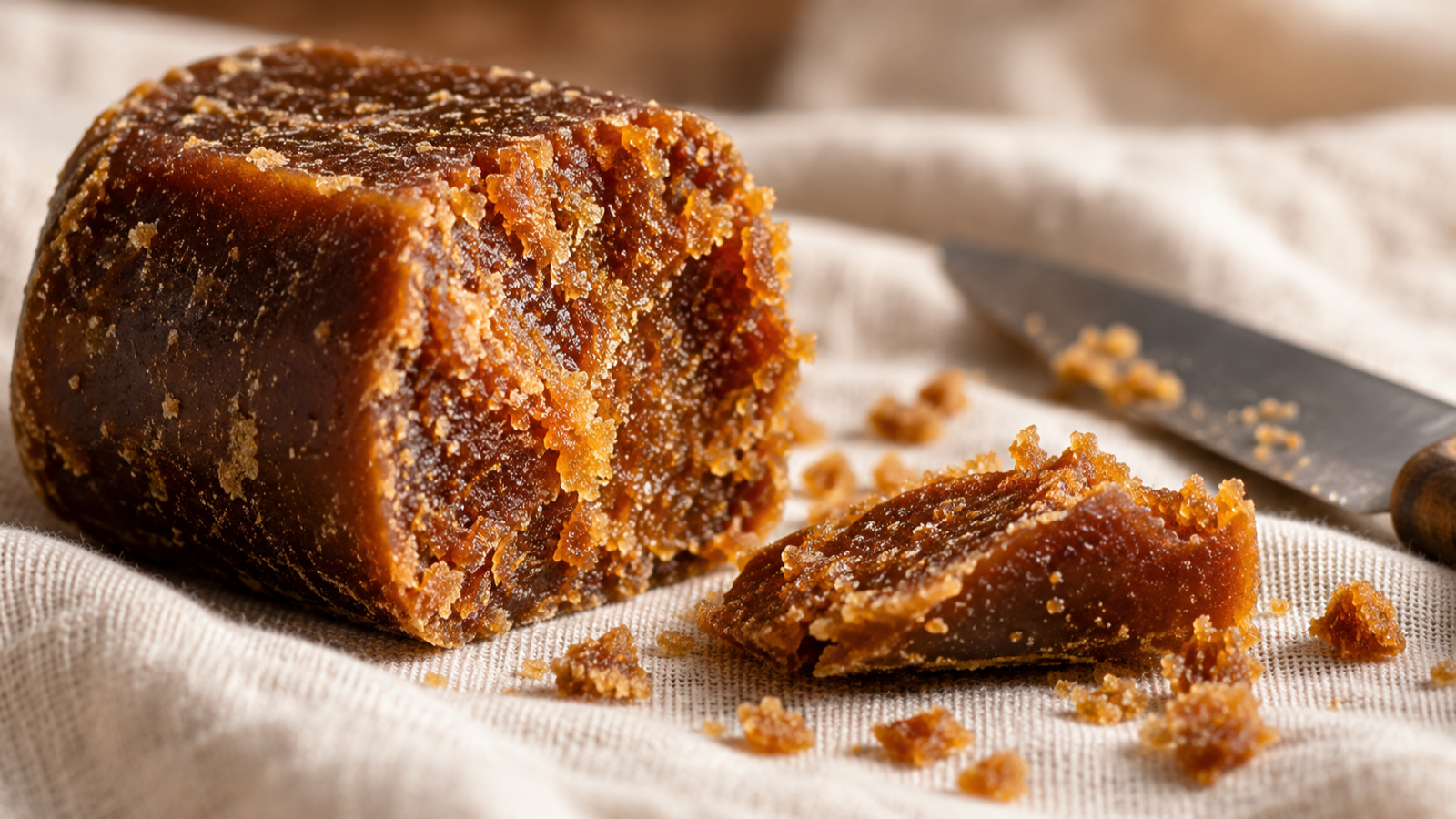
- Colour: genuine gula melaka is usually darker, a deep caramel brown.
- Softness: genuine blocks are softer. Cut or grated, they feel slightly moist and crumble easily rather than snapping like glass.
- Smell: warm caramel with a hint of coconut, not just a flat sweet smell.
Taste
Genuine gula melaka tastes deep and layered: the sweetness comes wrapped in a rich caramel flavour that lingers. Mixed sugar tends to taste evenly sweet, rather like ordinary sugar with colour added.
When you cook it
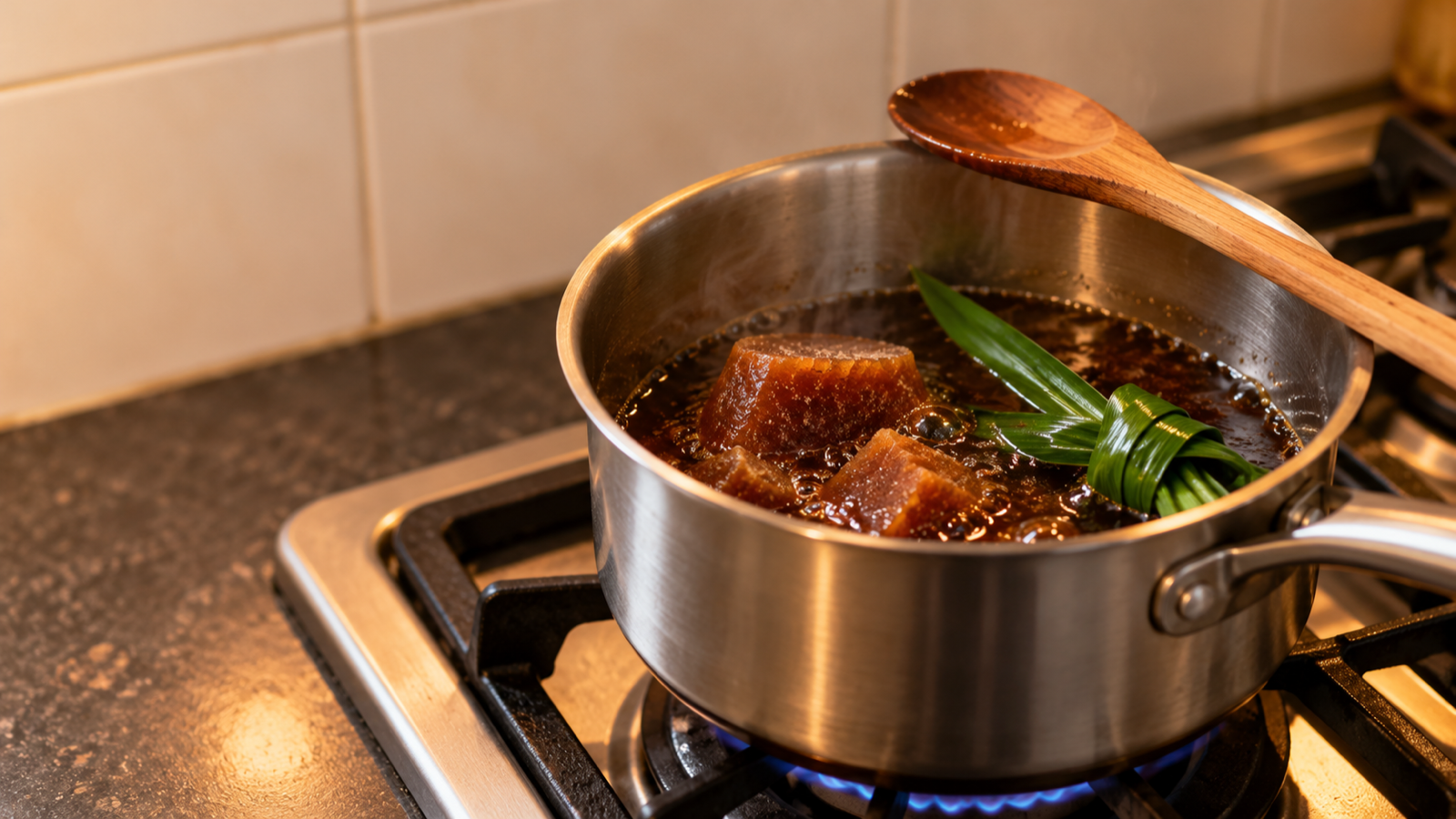
The saucepan test is the clearest clue. Melt a little sugar with water over low heat.
- Genuine gula melaka dissolves easily into a smooth syrup.
- Mixed sugar is more likely to burn on the base of the pan.
- Sometimes granulated sugar crystals can be seen floating or refusing to dissolve evenly as it cooks.
How to run a small test
- Take one small block or two tablespoons of grated sugar.
- Put it in a small saucepan with a splash of water.
- Warm it over low heat, stirring, and watch both the surface and the base of the pan.
For the full syrup ratio, see our guide on melting gula melaka.
Don't misread the signs
A few things can throw your test off:
- Heat that is too high: any sugar will burn over a fierce flame. Keep the heat low so the comparison is fair.
- Colour varies between batches: genuine gula melaka can differ slightly in shade from one batch to the next. Do not judge on colour alone.
- Sugar stored somewhere hot or damp: poor storage can change the texture. That is a storage issue, not necessarily a sign of mixing.
That is why the most useful test is a side-by-side one: two sugars, two pans of the same size, the same low heat.
Questions to ask a seller
A seller who is confident in the product will not mind answering. Good questions include:
About ingredients and method
- What sap is this sugar made from?
- Is any granulated sugar or preservative added?
- Is the product Halal certified?
About packing and price
- How is the sugar packed for delivery? Every order of ours is vacuum packed.
- What is the price per kilo, and is there a different rate for larger quantities?
For the record, our Gula Melaka Blocks are RM18/kg for 1–99 kg and RM15/kg for 100 kg and above, and our products are certified Halal by JAKIM. Granules and syrup are also available, with prices confirmed on WhatsApp. Full details are in our price list.
Why this matters for food sellers
For anyone selling kuih, cendol or pengat, gula melaka is the main flavour of the product. Sugar that burns easily wastes time and ingredients, and regular customers tend to notice when the taste changes. Many sellers in Melaka, Muar and Seremban run a small saucepan test whenever they switch suppliers.
Start with a small quantity
If you are trying a new supplier, order a little first, test it in your real recipe, then scale up once you are happy.
Got a question about our ingredients or how our gula melaka is made? We will answer directly. Message us here